
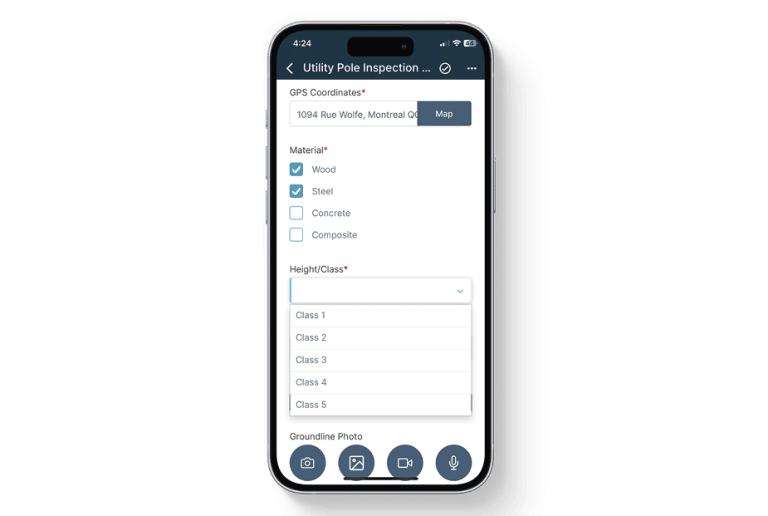
When you skip inspections, you don’t save money, but you do set yourself up for costly emergencies. Reactive maintenance forces utilities into a firefighting mindset, and in my experience, it’s one of the most significant sources of headaches and operational challenges.
On the other hand, utilities that align inspections with predictive maintenance spend less, extend asset life, and avoid the high costs of reactive repairs. Yes, you’ll invest more in labor upfront. Still, scheduled inspections consistently save money over time while extending the lifespan of critical assets.
The catch? Without strong field reporting tools (utility asset inspection software), even the best predictive maintenance plans can fall short. That’s why in this guide, we’ll share proven strategies to boost inspection efficiency, accuracy, and accountability. You’ll also get access to digital forms for Utility Pole Inspections, Transformer Inspections, and Meter Inspections—along with insights to help you optimize reporting workflows and align with SAIDI and SAIFI reliability objectives. Let’s learn how.
What “Good” Looks Like In Utility Field Reporting
Here’s what comes to mind for effective utility field reporting management: A service provider or related company manager implements a robust utility asset inspection software solution. They roll out the solution to their field teams and provide them with instructions on how to use the new digital inspection tools. Using that utility asset inspection software, organizations in the utility sector can semi-automate their communications, ensuring faster and more efficient incident response.
Of course, for this methodology to work, the digital inspection and reporting tools adopted must be customizable to provide fully functional and integrated utility field reporting. Here are a few things that need to be included in the standard operating procedures:
- Standardized forms per asset type
- Edge validation (required fields, ranges, conditional logic)
- Geo-verified photos and timestamps
- Sync that survives offline work (store-and-forward)
- One-click work order creation with severity
All of these elements help create an efficient and effective field reporting solution that your team can use, online or offline, to ensure that the proper documentation is not only completed but also completed accurately and shared instantly through the cloud. The said reporting system would help organizations better manage their SAIDI and SAIFI objectives. (Wikipedia Contributors, 2006.)
Now, to determine what is ‘Good’ from a fiscal perspective, we can assess the costs incurred related to reactive, preventive, and predictive maintenance policies. These three methodologies incur initial expense in the following order, from highest to lowest:
- Predictive
- Preventive
- Reactive
It is worth mentioning that this order is reversed when considering the long-term costs associated with reactive versus predictive maintenance practices. Reactive approaches always cost more in the long run. Predictive has more predictable costs, and also extends asset life, providing utility companies with long-term predictive costs that result in only a fraction of those requiring reactive management.
Assuming that you want to implement a more robust, cost-effective, and time-saving solution to your field reporting operations, let’s take a look at three real-life use cases in the field: poles, meters, and transformer inspections.
Reactive maintenance always costs more than predictive inspections.
Pole Inspections — Step-By-Step
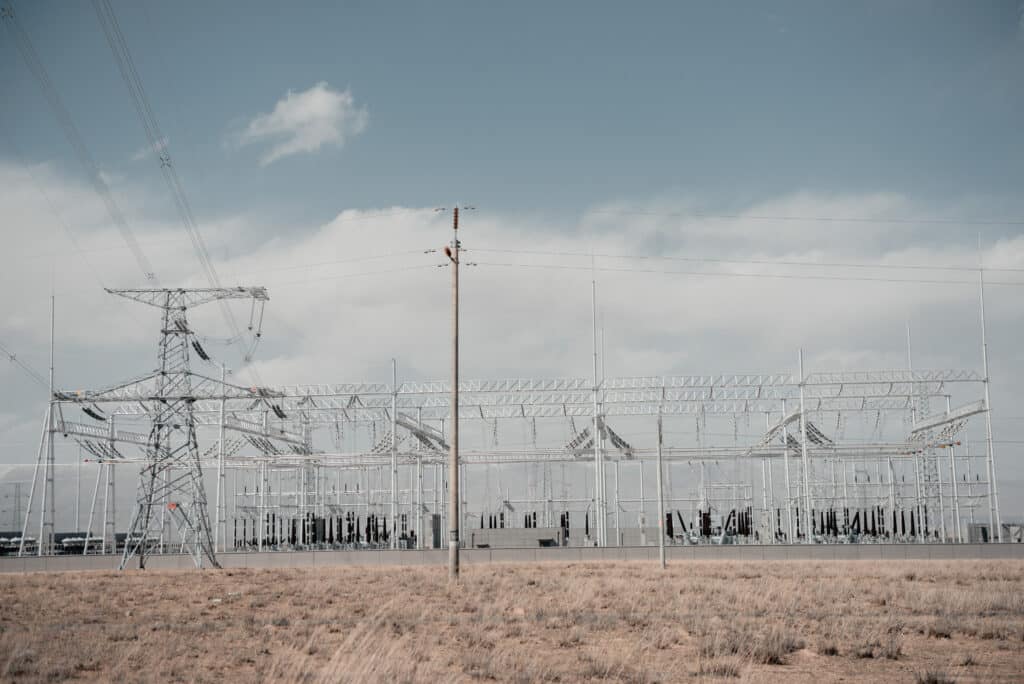
According to research, wood utility poles have an expected lifetime of about 45 years if left untreated. However, the service life of a wood utility pole, when treated and maintained (including inspections), more than doubles to 96 years. (Rey and Morrell, 2016.)
For composite utility poles, the math is equally compelling, with studies showing that composite poles, although more expensive upfront, have a longer lifespan than their wood counterparts. Furthermore, less heavy equipment is required to install them, making the higher price for materials provide a lower installation cost. Studies suggest that a lifetime value assessment would likely reveal similar long-term savings, identical to the differences observed between reactive and predictive maintenance practices. (Love et al. 2021)
Similarly, for concrete utility poles, I found further data to support a predictive strategy over a reactive one as being the best long-term value. A predictive strategy, leveraging non-destructive testing (NDT) techniques, data analysis, and modeling, would allow you to identify early-stage deterioration, forecast remaining service life, and optimize inspection frequency and replacement timing. (Ueno et al. 2025)
This same study found that, visually speaking, concrete utility poles tend to show greater than about 10% damage after 65 years of use. However, it also states that findings are based on typical visual inspections, and in the field, NDT testing techniques rarely assess things like load capacity, and are often based on visual inspection alone. (Ueno et al. 2025)
Field Reporting Tools
For inspecting utility poles, it is recommended that your field teams use a robust, yet intuitive and easily understood utility asset inspection software that supports offline use. Offline use is crucial for those ‘out of the way’ pole locations where potential cellular service might not be available.
These digital inspection tools should also provide additional features, including GPS location and dynamically added user data to reports, for enhanced efficiency and accountability. Furthermore, it’s crucial that your field teams be capable of using said software on their smartphones and that the software accepts photos or videos taken with the same device, if not incorporated directly into the solution itself.
You can find all of these features and more in the 1st Reporting application. More on that later.
Data You Must Capture
Utility poles, regardless of their type, all require inspection and maintenance. As mentioned above, it is best to optimize a predictive management strategy. To integrate this into operations, a utility pole inspection checklist, like the one found in the templates library of the 1st Reporting application, is essential and should include, at a minimum, the following information.
Utility Pole Inspection – Key Checklist Items
- General Condition
- Pole leaning, vertical alignment, or displacement
- Evidence of impact damage (vehicle, equipment, storm)
- Surface & Structural Integrity
- Cracks (vertical, horizontal, or diagonal)
- Splits, spalling, or surface deterioration
- Rot, decay, or insect damage (for wood poles)
- Corrosion signs (for steel/concrete reinforcement)
- Ground Line & Base
- Soil erosion or undermining around the base
- Decay or deterioration at the ground line
- Clearance from vegetation or obstructions
- Hardware & Attachments
- Crossarms, braces, insulators, and fasteners are secure and intact
- Loose, missing, or corroded hardware
- Signs of overloading or improper attachment
- Electrical Components
- Conductor condition (sagging, damaged, or corroded)
- Grounding system intact and functional
- Evidence of arcing, burns, or heat damage
- Environmental & Safety Considerations
- Proximity to trees, branches, or vegetation interference
- Wildlife nesting or other obstructions
- Accessibility for maintenance crews
A utility pole inspection app will suffice for this inspection. Still, a robust utility field reporting application, such as 1st Reporting, with its customizability, efficient workflow, and task management capabilities, makes it ideal for your field crew’s reporting and task management needs.
Photo Evidence Standard (Front, Top, Groundline, Hardware Close-Ups)
If using a customizable tool like 1st Reporting, be sure to include a media upload field in your utility pole inspection report templates. This feature enables your field teams to upload photos or videos directly from their devices within the application.
Including media is crucial, especially for newer field team members, to learn what to look for. According to one source, a standard wood pole becomes a ‘reject’ requiring reinforcement or replacement within 45 to 50 years if no groundline inspection happens. A ‘good’ inspection, in this case, would include media like photos or video documenting groundline rot and pole repair or replacement requirements. (Batchelor 2023)
Common Defects And Triggers (What Automatically Opens A WO)
One of the things I like about the 1st Reporting application for utility asset inspection is that it allows you to create custom workflows that trigger automated and dynamic components. For example, you might include a workflow where specific fields in a utility inspection report (such as a ‘further work required’ field) automatically trigger repair work order sequences. These sequences could include digitally attaching a copy of the inspection report to a dynamically generated infrastructure repair work order.
Furthermore, a good solution could also create a communication notification. Using the same scenario, the workflow could also trigger sending the work order request form and notifying an appropriate manager to approve the commencement of repair work.
Routine inspections can nearly double the service life of utility poles, transformers, and meters.
Meter Inspections — Safety And Tamper-Aware
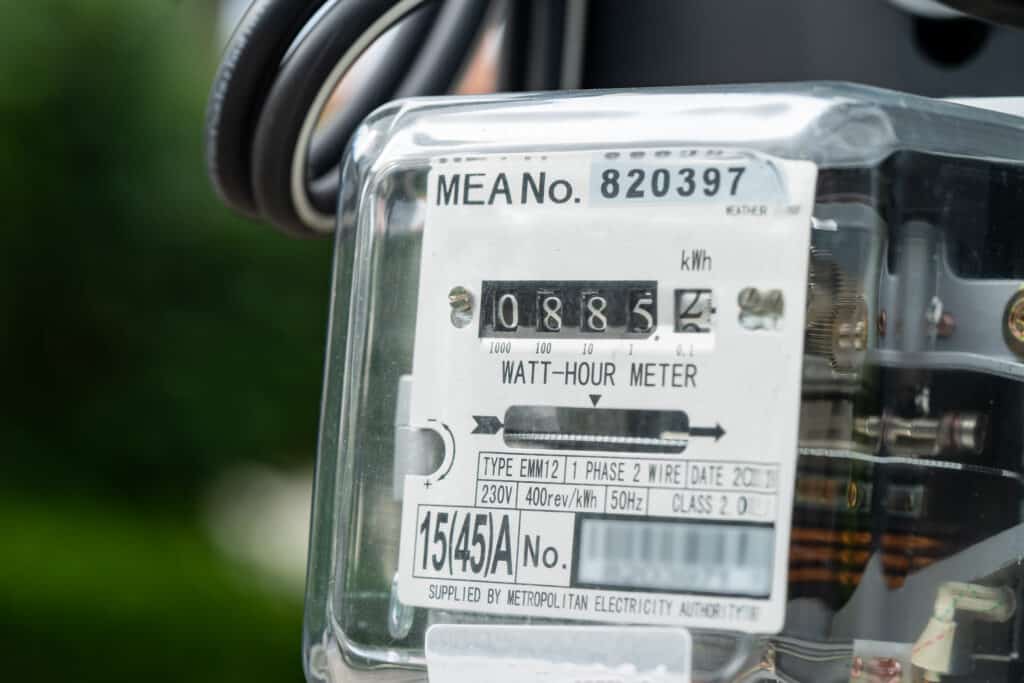
One of the most commonly inspected assets in the utility industry is the meter. Whether it’s a gas meter or an electric meter, these devices are crucial for utility operation and distribution management. Like the utility pole, a utility meter inspection app is vital. Still, it needs to be comprehensive and flexible enough to also work for other utility assets, such as service vehicles and transformers.
Although there are limited specific studies on the longevity of meter assets and the effects of both reactive and preventive/predictive asset management and maintenance strategies, I did find something interesting relating to utility hydropower asset inspections: assets managed with a predictive maintenance strategy show clear gains in reliability, availability, and cost efficiency. (Tabernero and Batlle 2007)
As we have already shown for utility assets like poles, it is reasonable to make the same assumption for meters, transformers, and other equipment in general. Let’s examine some of the specifics related to utility meter inspection in particular.
Data You Must Capture (Serial/Seal/Ami Last Read, Etc.)
Using a utility meter inspection application like the field reporting app, 1st Reporting, offers you a customizable template your team can adjust as needed and use to collect the required information from a utility meter inspection.
Utility Meter Inspection – Essential Data Points
- Meter Identification
- Meter type (electric, gas, water)
- Meter model and manufacturer
- Serial number/asset ID
- Location (GPS coordinates, address, pole ID, or building unit)
- Physical Condition
- Enclosure condition (intact, corroded, dented, cracked)
- Mounting securely and level
- Seals or covers intact / tamper evidence present
- The glass/plastic lens is clear and unbroken
- Connections & Hardware
- Condition of wiring (loose, frayed, corroded)
- Condition of piping (for gas meters – leaks, corrosion, stress)
- Grounding/bonding is secure and functional
- Proper clearance around the meter (vegetation, obstructions)
- Operational Indicators
- Reading display legible (digital or analog)
- Register functioning correctly (no stuck dials, frozen display)
- Data communication functioning (for smart meters – AMI/telemetry status)
- Error codes, alerts, or warning lights present
- Safety & Environmental Factors
- Gas odor (for gas meters)
- Evidence of leaks, condensation, or water ingress
- Nearby hazards (combustible materials, flooding risk)
- Accessibility for maintenance crews and emergency response
- Inspection Metadata
- Date and time of inspection
- Inspector ID/name
- Condition rating (e.g., good/fair/poor)
- Recommended action (monitor, repair, replace, escalate)
- Photo documentation (before/after or for anomalies)
Conditional Rules (Tamper → Escalate; Enclosure Damage → WO)
As mentioned earlier, for utility pole inspections, using a field reporting application like the 1st Reporting app provides the opportunity to create dynamic, automated workflows. These workflows might include a conditional trigger, such as a ‘further work required’ field on a meter inspection form.
Suppose your utility asset inspection software has the capability, as the 1st Reporting application does. In that case, you can have it notify the appropriate supervisor for approval and also dynamically generate a work order for completion of further work. This type of workflow automation comes easily with the 1st Reporting application, providing you with the industry’s most efficient and effective field reporting solution.
Check out the 1st Reporting application in action with a demo with the 1st Reporting team.
Field Risks & PPE Notes (Brief, Pragmatic)
Naturally, when dealing with any utility provision, there are always inherent risks in the field. Whether it’s a leaking gas meter or a faulty electrical meter, safety in the field should always be a top priority. With that said, when I managed industrial field service teams, our crews always conducted a pre-work service vehicle safety inspection.
Of course, depending on the asset type, there are various other safety inspections needed, so robust digital inspection tools like the 1st Reporting application that can handle not only meter inspections, but site condition inspections, PPE inspections, and all related inspections and management means that you can use a single reporting solution instead of having to resort to multiple platforms with multiple pricepoints.
Every missed inspection is a step backward on SAIDI and SAIFI reliability targets.
Transformer Inspections — Pad-Mount And Overhead
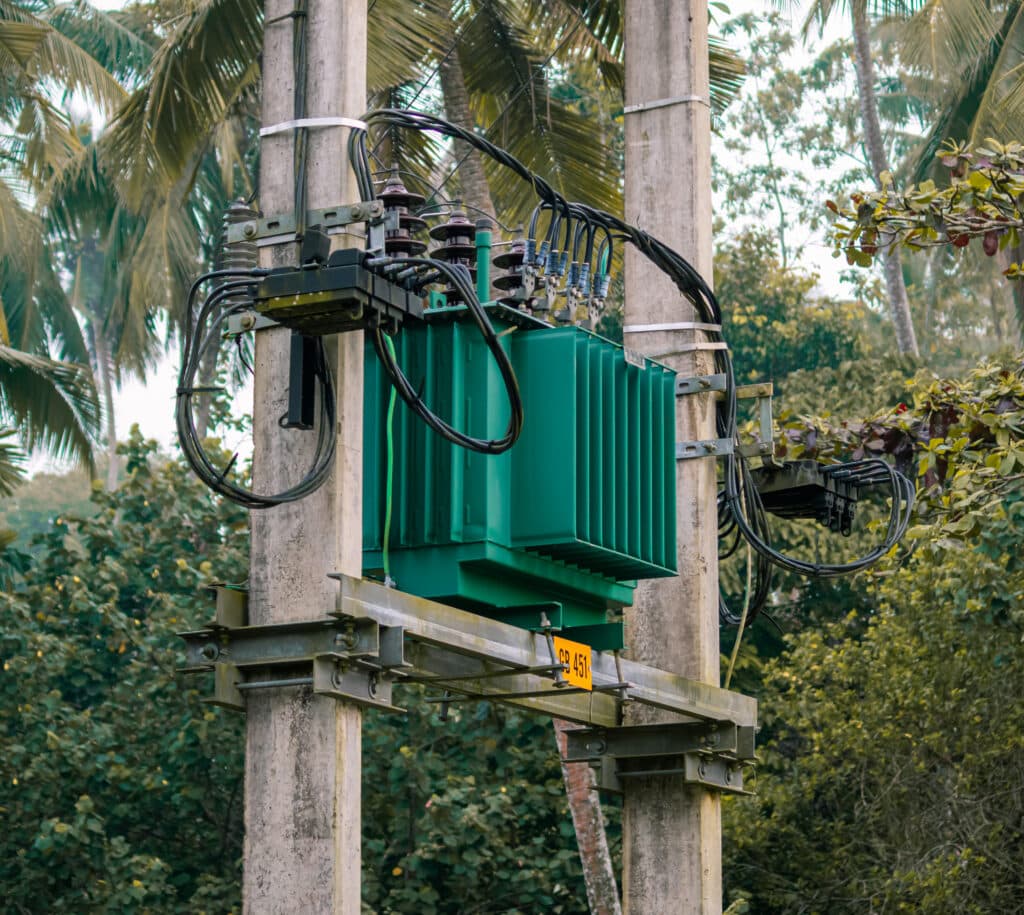
Much like utility pole inspections, when we encounter higher voltage or overhead equipment, such as transmission transformers, safety is on an entirely different level. You will need, at minimum, a transformer inspection app that also empowers field inspectors to manage their working at heights regulatory safety documentation and practice requirements.
Again, referencing my days managing industrial field service teams, I recall that at minimum, my teams who would bring lift equipment for elevated transformers and other elevated equipment would need a pre-work inspection completed for their service vehicle, trailer, boom or scissor lift, harness (PPE) or arc-flash equipment, depending on the nature of the equipment and inspection requirements.
In the realm of transformer inspection, research has shown that good maintenance, which includes a minimum of visual inspection, is more cost-effective. “When compared to emergency restoration, scheduled maintenance does a better job of incorporating the risk of asset failure into maintenance and replacement schedules. However, it can be comparatively more costly to implement in the near term due to the cost of recurring inspections and the replacement of assets before the completion of their useful life.” (Yates, Variani, and Schoenman 2023)
The study further states that, instead of a blanket asset lifecycle, a condition-based replacement is less cost-effective than a blanket approach. However, for this practice to be effective, regular transformer and asset inspection procedures must be integrated into operational schedules. (Yates, Variani, and Schoenman 2023)
Data You Must Capture
I’ve compiled another list of essential data points that your field teams should collect, at a minimum, when conducting a transmission asset inspection of a distribution transformer.
Transmission Transformer Inspection – Essential Data Points
- Asset Identification
- Transformer ID/asset tag
- Location (GPS coordinates, substation ID, line ID)
- Manufacturer, model, serial number
- Rated capacity (kVA/MVA), voltage class
- External Physical Condition
- Tank and enclosure integrity (corrosion, dents, leaks)
- Foundation condition (level, cracks, settlement)
- Paint/coating deterioration (UV/weather protection)
- Bushings: cracks, chips, oil leaks, contamination
- Cooling system condition (fans, pumps, radiators)
- Connections & Hardware
- Primary and secondary connections (tightness, overheating signs, corrosion)
- Grounding and bonding integrity
- Conductor strain or loose connections
- Control cabinet condition (seals, corrosion, wiring integrity)
- Operational Indicators
- Oil level and leaks (sight glass, gauges)
- Oil temperature and top-oil thermometer readings
- Pressure relief device status
- Load tap changer (LTC) operation and oil level
- Cooling fans/pumps operational check
- Diagnostic & Predictive Data
- Dissolved Gas Analysis (DGA) sampling (where applicable)
- Oil dielectric strength and moisture content
- Infrared thermography results (hot spots, uneven heating)
- Partial discharge detection (acoustic/electrical signals)
- Vibration or acoustic monitoring results
- Safety & Environmental Factors
- Oil containment system condition (bund walls, drains)
- Fire protection system (extinguishers, deluge, alarms)
- Clearances free of vegetation or obstructions
- Noise/vibration above normal thresholds
- Accessibility for crews and emergency response
- Inspection Metadata
- Date and time of inspection
- Inspector ID/name
- Overall condition rating (good/fair/poor)
- Abnormalities detected (with notes/photos)
- Recommended action (monitor, test, repair, replace, escalate)
To see this list in action, you can sign up for the 1st Reporting application. As the application has powerful customization capabilities, you can easily amend the list to suit your specific needs.
Photo & IR Tips
Photo or video evidence collection is crucial for items such as meters and poles, just as it is for transformer inspections. However, for transformers, we also need to consider including Infrared Thermography observations. Here is where having an application like the 1st Reporting application is essential, as it allows you to add custom fields to the utility asset inspection software forms and checklists. It enables your field teams to upload files and media, including Infrared Thermographic Imagery.
Auto-Classification Rules (Active Leak → Critical WO + Spill Protocol)
One of the features I wish I had at my disposal when managing industrial service field technicians was a powerful workflow and task management system integrated with inspection reporting tools. When I managed field teams, we had to employ several different approaches in an attempt to unify data collected in the field and generate the appropriate follow-up response, whether it was a repair work order or an emergency asset replacement order.
Using a field reporting tool as customizable as the 1st Reporting application makes reporting and subsequent management of assets in the field, like distribution equipment, easy, efficient, and effective.
From Inspection To Closure — The Workflow That Cuts Backlog
Inspection data without a field reporting structure is just noise—you need validation rules to make it actionable.
By now, you should have a vague understanding of how the 1st Reporting application makes utility field asset inspection and repair management easier and more efficient. However, we don’t just stop there because we’ve analyzed work orders and workflows across industries, not just within the utility space. This objective insight has enabled us to assist utility service providers with powerful, semi-autonomous workflows that incorporate the best of today’s technology with the ease and efficiency of an intuitive mobile application.
For inspection of utility equipment and assets, we recommend a basic four-step general approach:
- Plan & dispatch by feeder (map routes via GIS)
- Validate in the field (edge rules, geo-locks)
- Sync, QA, and auto-generate WOs in CMMS/EAM
- Close and verify (post-work audit checklist)
Using a standardized workflow for your utility asset management is crucial in empowering your field teams to provide the appropriate and required data in the field the first time, thereby avoiding repeat visits for information. However, to ensure everything works seamlessly and syncs with existing utility management software, you will need to verify that your field reporting solution offers the necessary integrations.
Integrations That Matter (GIS, AMI/MDMS, CMMS/EAM, OMS/ADMS)
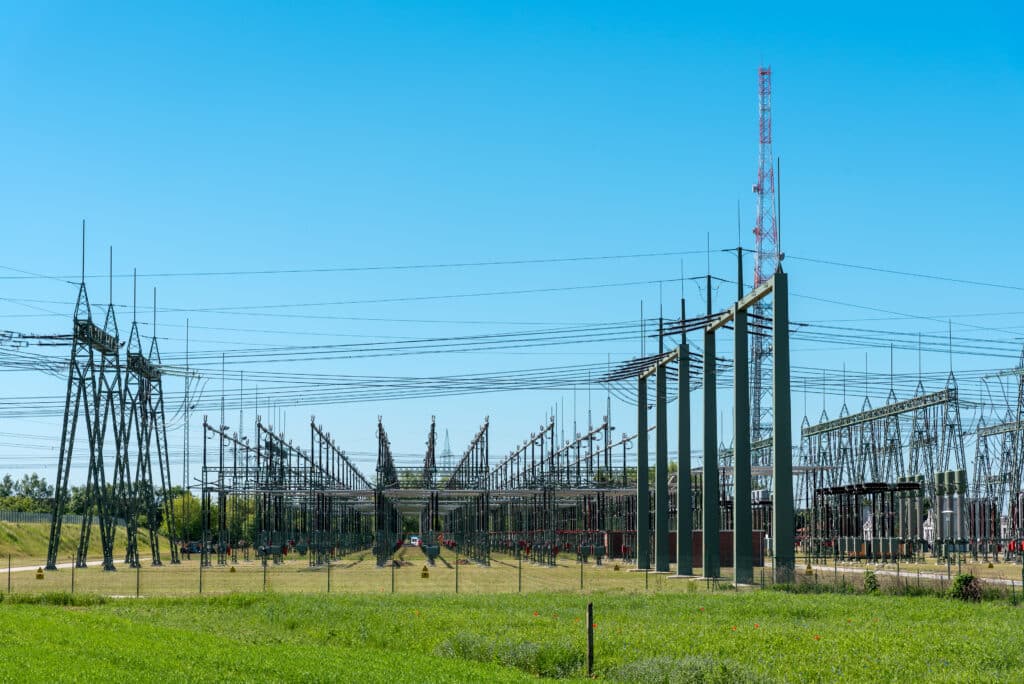
Digital inspection tools must be able to communicate with existing systems. The problem with most utility asset inspection software is that it delves too deeply into the specifics, losing itself in the weeds of detail, so to speak. This specificity or ‘tunnel-vision’ (as I like to call it) often impairs the ability of a ‘solution’ to ‘speak’ with other solutions. For example, a dedicated utility asset inspection software tool may not work with your service scheduling software or other software needed for regulatory compliance reporting and similar operations.
The 1st Reporting application features a robust API integration for enterprise clients, making it easy and practical to integrate with your existing software. Contact our team for more information about our custom API integration solutions.
KPIs And Dashboards
Upfront labor costs for inspections are tiny compared to the financial hit of emergency outages.
Before we close off this article today, it’s also noteworthy to mention that any acceptable utility asset inspection software tool must also include a management dashboard or dashboards, as well as KPI reporting. The added reporting features empower you and your team to apply predictive measures to your inspections by enabling trend observation and other critical reporting summary data you need to drive cost-effective asset management forward.
Start With the Best Field Reporting Tools
Whether you’re managing field teams, implementing preventive or predictive maintenance, responding to reactive incidents, or inspecting utility assets, starting with the right tools for the job is the crucial first step to more effective and efficient field reporting. In terms of utility asset inspections, the right tools for the job mean utilizing a powerful and customizable digital field reporting tool, such as the 1st Reporting application, which features customizable workflows and digital forms. After all, digital field forms transform inspections from paperwork into decision-ready data.
Sign up for a trial of the 1st Reporting app or book a demo of 1st Reporting today and see how more efficacious and cost-effective powerful field reporting tools can be for you and your team.
FAQs
- Q: What is a utility pole inspection?
- A utility pole inspection is a routine field check that documents the condition of poles, hardware, grounding, and attachments. Inspectors record pole ID, lean angle, groundline integrity, hardware condition, and safety clearances—usually with photos and measurements. If defects are found, the system automatically generates a work order for repair.
- Q: What should you check during a transformer inspection?
- During a transformer inspection, you’ll check oil levels, bushings, connections, grounding, and the integrity of the enclosure. Look for leaks, corrosion, or abnormal temperature or sound. Any active oil leak, severe corrosion, or loose electrical connection should be flagged as a critical work order.
- Q: How often should utility meters be inspected?
- Utilities typically inspect customer meters on a set cycle—often every few years or during service changes. Inspections focus on seal integrity, enclosure condition, wiring safety, and communication status with the AMI system. Frequency depends on local regulations and utility policy.
- Q: How does GIS improve utility inspections?
- GIS improves inspections by linking each field report to an authoritative asset location. Inspectors can select assets directly from the map, auto-fill IDs, and ensure geo-tagged photos match the correct pole, meter, or transformer. It prevents data entry errors and ensures inspections are tied to the right asset.
- Q: How do field reports generate work orders?
- Modern reporting apps utilize conditional logic to convert inspection findings into work orders automatically. For example, if a transformer inspection notes an “active oil leak,” the system escalates the defect as a critical WO, pre-fills asset data from GIS. It routes it to maintenance crews without manual re-entry.
More Utility Field Reporting Guides From 1st Reporting
- Storm Damage Report Template | Utility Storm Damage Assessment Guide
- How Utilities Can Simplify Crew Onboarding with Digital Reporting Tools (No Onboarding Software Needed)
- How Utilities Supervisors (Should) Use Digital Reporting
- The Complete Workflow: From Utilities Job Site to Compliance Report
- How Utility Managers Can Streamline Operations: Reporting, Scheduling & Asset Management Software Integration
Article Sources
- Contributors. 2006. “Reliability Index Used by Electric Power Utilities.” Wikipedia.org. Wikimedia Foundation, Inc. March 18, 2006. https://en.wikipedia.org/wiki/SAIDI.
- Contributors. 2006. “System Average Interruption Frequency Index, a Reliability Indicator by Electric Power Utilities.” Wikipedia.org. Wikimedia Foundation, Inc. March 18, 2006. https://en.wikipedia.org/wiki/SAIFI.
- Rey, Jeff, and J Morrell. 2016. “Estimated Service Life of Wood Poles.” Accessed September 1, 2025. https://woodpoles.org/wp-content/uploads/TB_ServiceLife.pdf.
- Love, Lonnie, Brian Post, Halil Tekinalp, Peter Wang, Celest Atkins, Alex Xianhui, Andy Zhao, and Mitch Rencheck. 2021. “Assessment of Commercial Composite Power Pole Performance.” https://info.ornl.gov/sites/publications/Files/Pub160200.pdf.
- Ueno, Takayuki, Hiroki Tamai, Kanoko Yasukawa, and Masahiro Haruguchi. 2025. “A Review and Future Directions on the Deterioration Evaluation of Concrete Utility Poles.” Applied Sciences 15 (7): 3527–27. https://doi.org/10.3390/app15073527.
- Batchelor, Nelson Bingel, Robert. 2023. “Poles Apart: The Surprising Truth about Power Pole Evaluation Methods and Their Results.” Tdworld.com. 2023. https://www.tdworld.com/test-and-measurement/article/21276039/osmose-utilities-services-inc-poles-apart-the-surprising-truth-about-power-pole-evaluation-methods-and-their-results.
- Tabernero, Andres, and B Batlle. 2007. “Predictive Maintenance in Hydrogenerators.” ResearchGate. Unknown. 2007. https://www.researchgate.net/publication/228351733_Predictive_Maintenance_in_hydrogenerators.
- Yates, Devon, Maryam Variani, and Eric Schoenman. 2023. “Pacific Gas and Electric Company EPIC Final Report Program Electric Program Investment Charge (EPIC) Project EPIC 3.20 Data Analytics for Predictive Maintenance Department Electric Operations -Asset Management.” https://www.pge.com/assets/pge/docs/about/corporate-responsibility-and-sustainability/PGE-EPIC-Project-3.20.pdf.