
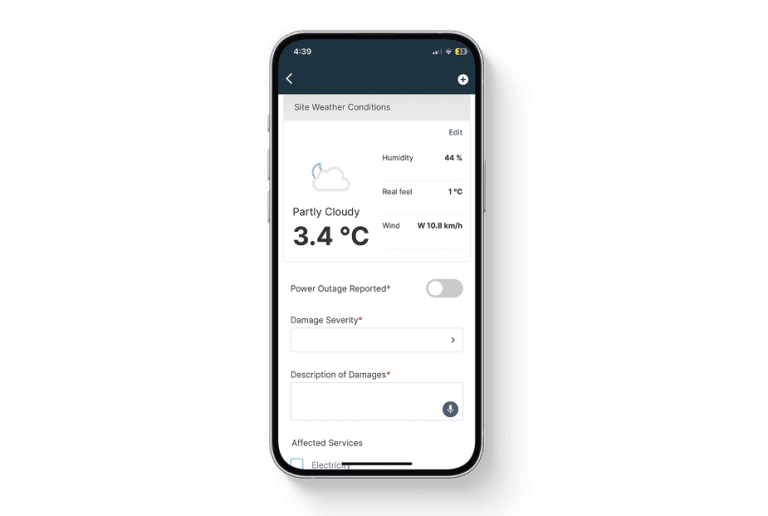
Having an effective storm damage report and reporting process is crucial to both post-storm follow-up repair and future weather event preparation. It helps you overcome inconsistencies in documentation, speeds up restoration response, and simultaneously improves regulatory compliance through post-storm damage reporting standardization.
Yet, despite the benefits of standardized storm damage assessment, some utility companies are still taking their time to overcome field reporting challenges and communications bottlenecks. To support the adoption of more efficient and effective processes, we have created this guide and storm damage report to aid in mobile storm damage inspection efforts.
Learning from events like the 2022 Canadian derecho, which impacted over 1.1 million utility customers, we see that documentation in the field plays a critical role in post-storm restoration management. (Wikipedia, 2022)
Costs from the May 2022 derecho event topped 875 million (Canadian dollars). However, with effective and efficient post-storm or weather event management, these sorts of events may be easier and less costly to prepare for and respond to. That successful management owes its foundation’s strength to the use of mobile and standardized storm damage assessment documentation. For that, we’ll need a reusable template.
What Is a Storm Damage Assessment Template for Utilities?
The Canadian Disaster Database records details on over 1,000 natural, technological, and conflict events since 1900 affecting Canadians. It’s just one of many examples of storm and disaster-related documentation practices to note how disasters affect a population. The storm damage assessment works the same way. (Canadian Disaster Database, 2025)
Of course, in the United States, it’s FEMA that manages major disasters. You can find a variety of their official disaster reporting forms on their website, but these are for major catastrophic events and include requests for federal assistance. In other words, they might be a good reference, but they are not what is needed for minor weather event scenarios, although some of the elements of their forms bear some resemblance to a storm damage assessment report. (FEMA, 2025)
As you know, a storm damage report is a structured form used to document storm-related infrastructure damage. This infrastructure damage typically requires some form of restorative service; therefore, relying on the storm damage assessment form to provide standardization and familiarity with reporting elements needed from utility professionals and technicians in the field.
A structured utility damage report template is crucial for the restorative process following a utility-affecting weather event.
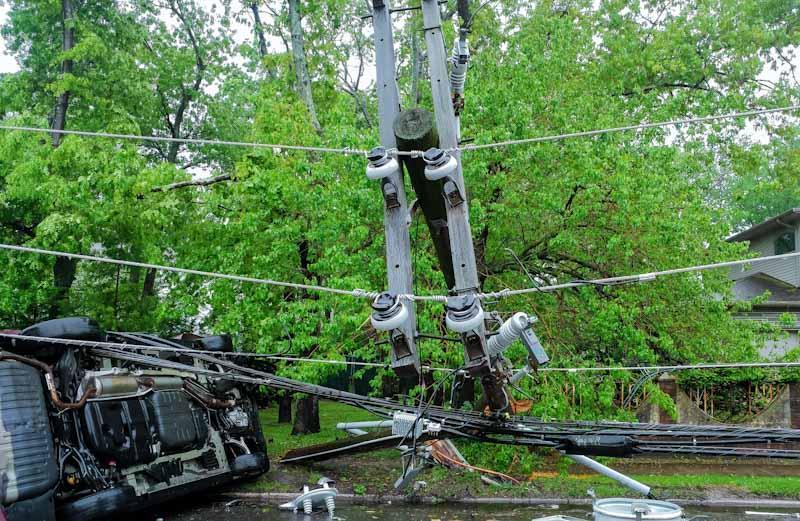
Naturally, most people who see the image above and consider storm damage will immediately think of electrical service damage, like a tree taking out a power line. However, a storm damage inspection and assessment is crucial not just for electricity providers but also for gas, water, and telecommunications.
No matter the type of utility you work with, a standardized storm damage assessment form brings consistency, familiarity, and better field guidance regarding safety protocol as well as information gathering requirements. After all, if your field personnel have the exact form they need to comply with a post-storm damage assessment, the form will guide them through all of the necessary steps and information they must ensure collection thereof.
Why Standardized Post-Storm Reporting Matters
U.S. electricity customers experienced an average of 5.5 hours of power interruptions in 2022, about two hours less than in 2021. It’s because of post-storm reporting that we even know these sorts of facts to begin with. Standardization of this practice makes sense, not just for statistical purposes, but also for preparatory decision-making. (“U.S. Electricity Customers Averaged Five and One-Half Hours of Power Interruptions in 2022 – U.S. Energy Information Administration (EIA)” 2022)
Integrating a standardized post-storm reporting procedure into your field operations is a positive and beneficial approach to managing storm damage reports. However, there are a few reasons why this is more crucial than it may, at first, appear.
Ensures Accurate Prioritization of Repairs
When your field team reports in from a weather event site, you know they need to provide the correct information in order to ensure timely restoration efforts. A standardized post-storm report that includes digital media (photos, videos) vastly outperforms its paper-based written counterparts. Click here to learn more about how the 1st Reporting application makes storm damage inspection and reporting easier and more intuitive.
Supports Regulatory Compliance (CSA, IEEE, FEMA)
A standardized storm damage assessment helps utility providers to maintain the highest standards relating to safety and regulatory compliance. Using a digital reporting platform like the 1st Reporting application allows organizations to ensure they use standardized, yet customized forms to suit their location’s regulatory requirements, as well as those outlined by government agencies like FEMA. (“Force Structure Guide (Draft 1.0) D-0 FEMA Preliminary Damage Assessment Guide” 2025.)
Enables Long-Term Infrastructure Planning
Good reporting enables better, more data-driven decision-making for improved long-term infrastructure planning. As mentioned earlier, better preventive measures are only possible when we record, document, and analyze historical data. Therefore, the more comprehensive our reporting, the more precise our decisions for future planning become.
However, we still need to proactively manage the documentation process in order to balance the comprehensive nature of better reporting with the efficient and effective, less labor-intensive reporting practices. To do that, we need to make a storm damage assessment form that suits local, regional, national, and other safety and reporting requirements.
What’s Included in a Storm Damage Assessment Form?
The Storm Damage Assessment Form should include a variety of information. However, the exact elements needed will depend on the type of storm damage, the kind of infrastructure inspected, and other factors and variables, including but not limited to specific environmental observations.
What we need is a standardized base to start our storm damage form, and a means to customize that base to suit specifics. Let’s start with the basic information we should include in a general storm damage inspection form.
Administrative Information
- Event name or ID,
- Date
- utility name
- Location
- Report author
Asset and Site Details
- Type of asset (for example, a pole, line, or transformer),
- Location (GPS/Address)
- Asset ID
Damage Description & Inspection Details
- Field-observed damage type
- Severity scale
- Photos/sketch fields (ideally media upload capabilities, like the 1st Reporting app)
Crew Safety and Hazard Notes
- Notes on downed wires
- Unsafe access
- Chemical/hazard flags
Recommendations and Follow-Up Actions
- Suggested actions
- Notes to management
- Scheduling status
Sign-Off and Date
- Crew leader name/signature + supervisor/inspector confirmation
These items are preliminary, so you should consider not only including them, but customizing them accordingly to suit your organization. Now, if you’re using a paper form, you’ve got some work to do to customize, reprint, and distribute it to all your teams. Luckily, there’s a better way to go about using the Storm Damage Report Form. Let me introduce you to 1st Reporting.
Download the Utility Storm Damage Assessment Template (PDF & Digital)
Sure, you can make a printable utility storm damage assessment form, but why bother when you can use the digital version in the 1st Reporting app? It’s mobile, so your team can use smartphones, tablets, or even laptops to access the forms and complete them in the field. The dynamic information gathering with GPS integration speeds up the reporting process, too, so your field teams don’t have to spend time writing their name, location, or time of report creation. In fact, with the new weather field element, the reporting solution can also note the current weather conditions automatically.
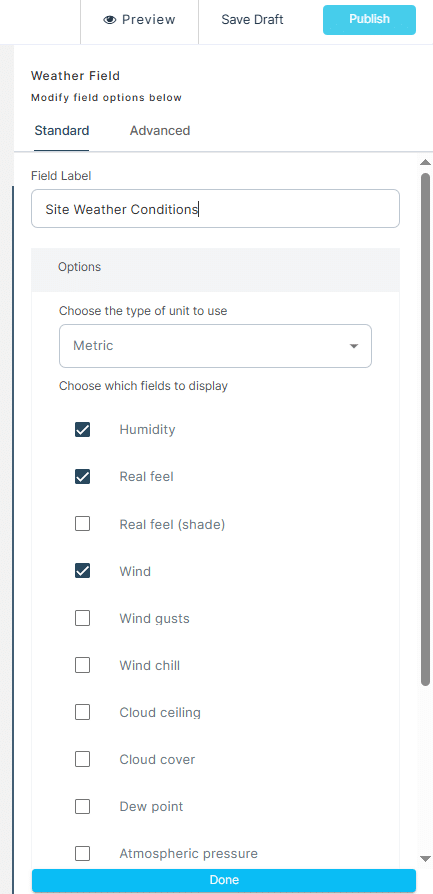
Using the storm damage report template in the 1st Reporting application allows you to have complete control over customizing the form for your organization. In fact, the existing forms found in the application are fully customizable, so you can ensure your teams comply with GIS, FEMA, or other regulatory requirements.
Find 1st Reporting at Google Play
Find 1st Reporting at The Apple App Store
How to Use the Storm Damage Reporting Form in the Field
Instructions for your teams in the field for using the storm damage reporting form ought to be simple, easy to understand, and easy to remember. These points are crucial because, in a storm damage scenario, your teams must perform at maximum capability without the time to fumble over how this or that form completion should occur.
To help you and your team, we’ve created a simple four-step procedure that your teams can use for storm damage documentation:
Step 1 – Prep Your Crew & Safety Protocols
The best thing to do is prepare your field teams. Start by creating standard operating procedures for storm damage reporting that begin with safety protocols. To simplify the process, consider using safety checklists, such as those for assessing PPE and conducting site safety inspections, before proceeding. It ensures that hazards are adequately identified and contained.
Step 2 – Conduct the Initial Damage Assessment (IDA)
According to our research, analysts could identify causes in approximately 80% of electric disturbance events filed via the OE‑417 form. This fact provides us with direct evidence that conducting and documenting storm damage gives us the data needed not only for proactive asset management, but also for a greater understanding of how infrastructure hardening can prevent future interruptions. (“OE-417 Electric Disturbance Events Database | Secure the Grid” 2022)
Step 3 – Log, Photograph, and Prioritize
Ensure teams gather all the information that they can, prioritizing safety. Using the smartphones or tablets they likely carry already, today’s field teams can collect photos, videos, or even sound recordings and include them in their storm damage inspection reports. These media features are made easy with the 1st Reporting app that empowers teams to include media in their inspection reports.
Step 4 – Submit Reports to Ops for Restoration Planning
The last step in any data gathering mission is to submit the findings. Where storm damage is concerned, the sooner the data is collected, the faster responsive actions can take place. This stage is where efficient information sharing is crucial: Using a paper report relies on that report being physically delivered back to operations. That takes time and energy; not to mention the nature of a paper report does not make it immune from being lost, smudged, or incomplete.
Utilizing a digital reporting system, such as the 1st Reporting application, significantly accelerates the reporting process by leveraging secure online cloud storage for report saves. That means that you can literally look at a report completed mere seconds before by a member of your team, off at some faraway storm damage location. Include a custom automated notification, and you could learn about the storm damage the moment your field team begins a report.
Yes, you could be on a call with them discussing the damage before they even have a chance to complete their report in the field. It is next-level real-time storm damage reporting at its finest.
Real-World Example: 2022 Canadian Derecho Impact
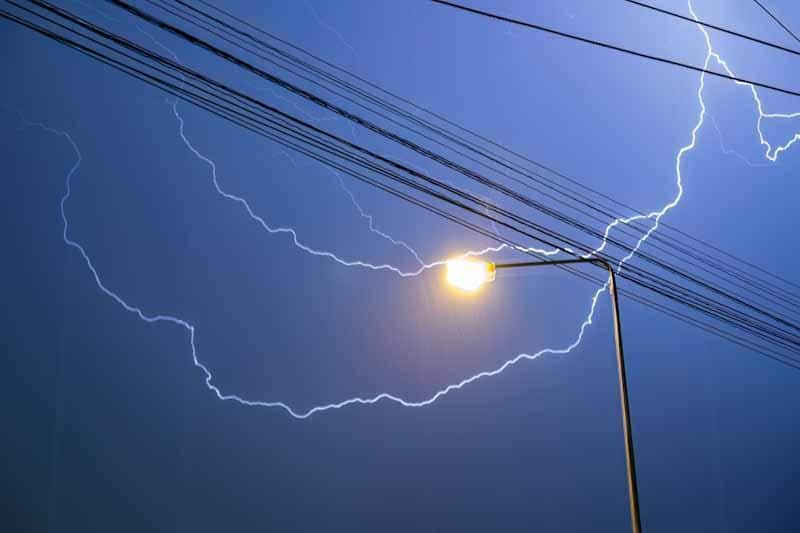
In May of 2022, a derecho (a large and widespread, long-lasting windstorm that scientists associate with a band of rapidly moving thunderstorms) hit Ontario and Quebec, Canada. This 1000 km long by about 100 km wide strip of storms caused over a billion dollars in damages, knocking out power and other utilities across a large area. (“Maps for May 21st Derecho and All 2022 Ground Surveys” 2022)
Naturally, it’s not hard to consider that there were hundreds, maybe thousands of storm damage reports generated from this single line of storms. Given the widespread devastation and high costs, it’s clear why efficient and effective reporting is necessary.
During storm events like those mentioned above, it’s crucial to use a standardized form. It ensures that first responders dealing with the devastation use a familiar form that helps them, rather than adding more stress to an already stressful situation. Going digital for these forms is the best evolution of the process yet. Learn more about 1st Reporting for Utilities.
Advantages of Going Digital with 1st Reporting
There are several benefits to using a digital reporting tool like the 1st Reporting app, which I’ve mentioned a couple of times in this article. The TL;DR is that 1st Reporting adds speed, security, GPS tagging, photo and media upload, a central report management dashboard, and more to make storm damage reporting fast, effective, and efficient.
You can use 1st Reporting to never again lose paperwork and also to enable real-time coordination with your teams in the field. It features custom notifications, custom forms, and a task management system, allowing you to delegate response actions.
Start a trial of 1st Reporting here.
Final Thoughts & Best Practices
Effective storm damage reporting is the foundation of faster recovery, safer field operations, and stronger regulatory compliance. Standardized, digital forms—like the customizable storm damage assessment template in the 1st Reporting app—equip your crews to collect accurate, actionable data in real time.
Train your teams, integrate safety protocols, and leverage GPS tagging, photo uploads, and automated alerts to streamline response. Bookmark this guide, download the app, and make the template part of your standard storm response—so when the next storm hits, you’re ready to act with speed, accuracy, and confidence.
Download the 1st Reporting app today and give your crews the tools they need to assess storm damage faster, safer, and smarter—before the next storm strikes.
References
- To, Contributors. 2022. “Intense Squall Line on May 21, 2022.” Wikipedia.org. Wikimedia Foundation, Inc. May 23, 2022. https://en.wikipedia.org/wiki/May_2022_Canadian_derecho
- “Force Structure Guide (Draft 1.0) D-0 FEMA Preliminary Damage Assessment Guide.” 2025. https://www.fema.gov/sites/default/files/documents/fema_rd_pda-guide_07012025.pdf.
- Canada, Public Safety. 2025. “The Canadian Disaster Database.” Publicsafety.gc.ca. 2025. https://www.publicsafety.gc.ca/cnt/rsrcs/cndn-dsstr-dtbs/index-en.aspx.
- “Preliminary Damage Assessments.” 2025. Fema.gov. July 2025. https://www.fema.gov/disaster/how-declared/preliminary-damage-assessments.
- “U.S. Electricity Customers Averaged Five and One-Half Hours of Power Interruptions in 2022 – U.S. Energy Information Administration (EIA).” 2022. Eia.gov. 2022. https://www.eia.gov/todayinenergy/detail.php?id=61303.
- “OE-417 Electric Disturbance Events Database | Secure the Grid.” 2022. Secure the Grid | Don’t Let the Lights Go out in America… December 31, 2022. https://securethegrid.com/oe-417-database/.
- “Maps for May 21st Derecho and All 2022 Ground Surveys.” 2022. Www.uwo.ca. 2022. https://www.uwo.ca/ntp/blog/2022/maps_for_may_21st_derecho_and_all_2022_ground_surveys.html.